


Choosing shutters for a South‑East home in winter is about more than looks. You want warm rooms, smooth operation, a finish that suits your style, and a material that will last. If you are weighing real timber against PVC or vinyl, this guide sets out the strengths and trade-offs clearly so you can decide with confidence.
Quick overview: timber vs PVC in real homes
Real timber: premium feel, excellent thermal performance, light yet strong, quiet to operate, wide colour and stain options, repairable and long lasting when cared for. Best for living rooms, bedrooms, dining spaces and larger bays where weight matters.
PVC or vinyl: moisture resistant, stable colour in wet rooms, easy to wipe down, typically heavier and slightly more rigid in feel. Best for bathrooms, wet rooms and steamy kitchens.
So, are timber or PVC shutters better? The right answer depends on the room, window size and finish you want. For most living spaces, we recommend premium hardwood. For high‑humidity rooms, moisture‑resistant PVC makes sense.
Winter insulation and comfort
Both materials improve insulation by creating a still air layer between glass and room. In practice, real timber often performs better for winter comfort because:
- Timber frames and louvres are lighter, so they sit and seal well within a precision‑made frame.
- The quieter, smoother action encourages daily use. You are more likely to tilt and close them on cold evenings, which improves warmth.
If you want to push insulation further for bay windows or bedrooms, pair shutters with discreet cellular blinds behind the panels. Our surveyors can show you options during a home visit.
Weight, bays and hinge stresses
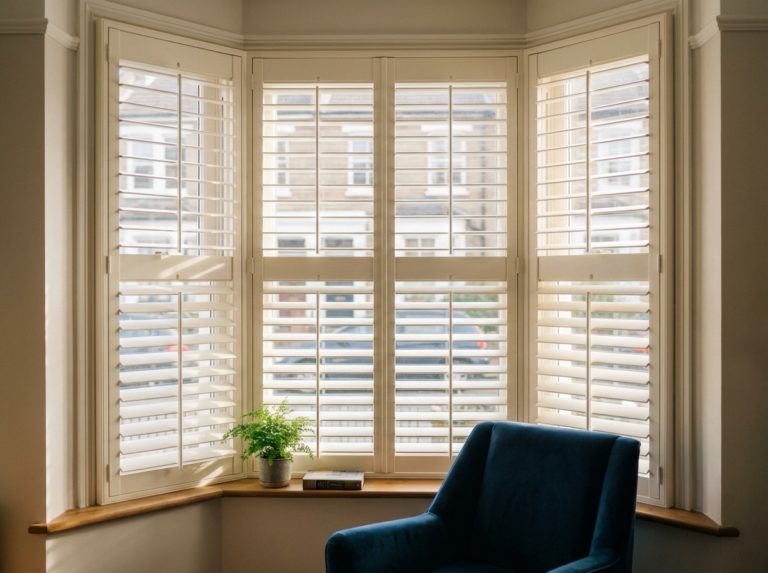
Large bays are common across Essex and Suffolk. Weight matters on those wider spans.
- Timber shutters are strong for their weight, which reduces stress on hinges and fixings. This keeps panels aligned and reduces the risk of sagging over time.
- PVC shutters are heavier. On wide bays, extra weight can increase hinge wear and may require more robust hardware or design adjustments.
If you have an expansive bay or oversized panels in mind, a real wood specification usually gives the best balance of elegance, stability and longevity.
Moisture resistance in kitchens and bathrooms
Steamy bathrooms, wet rooms and splash‑zone kitchens call for moisture‑resistant materials. PVC or vinyl shutters are ideal here because they do not swell with humidity and they are easy to wipe dry after showers. In utility spaces with frequent moisture or where a window sits inside a shower enclosure, choose PVC.
In light‑use cloakrooms with good ventilation, timber can still work, but PVC gives more peace of mind.
Colour stability and finish
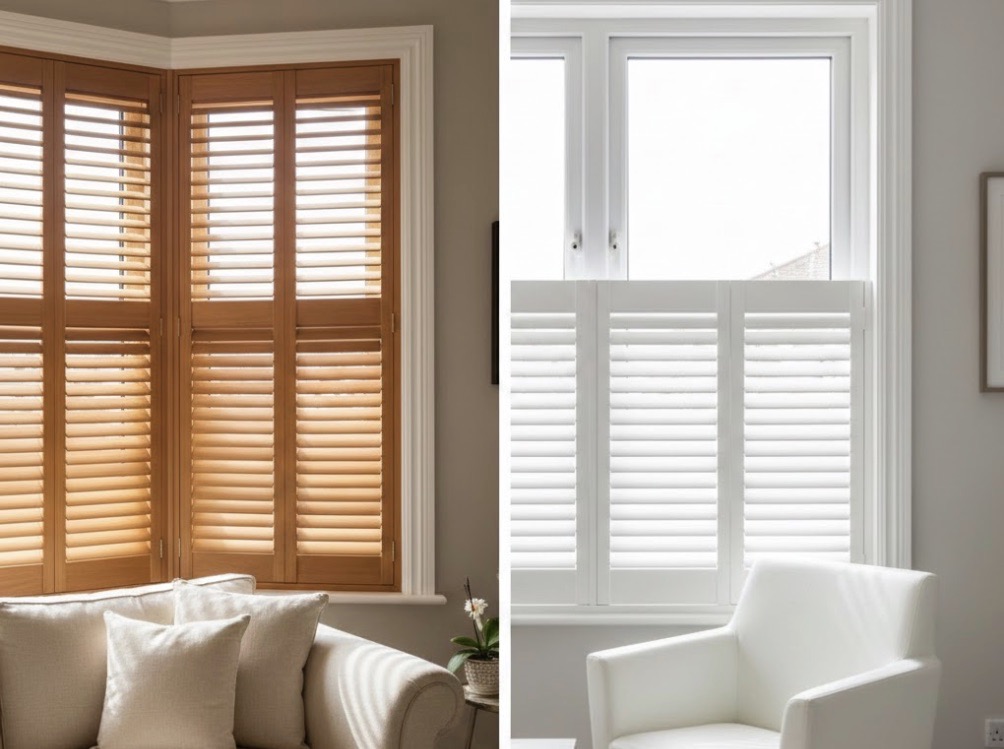
- Timber: available in rich stains that show natural grain, plus painted finishes from classic whites to deep tones. High quality paints and lacquers resist UV fade and yellowing when maintained.
- PVC: colour‑through materials hold tone well in wet rooms. Whites remain crisp with simple cleaning. Colour ranges are narrower, and you will not get the same tactile grain or depth as real timber.
If a refined, furniture‑grade finish is your priority, timber wins. If you need a bright, wipeable wet‑room white, PVC is a safe bet.
Repairability and long‑term value
Timber shutters are highly repairable. Individual louvres, tilt mechanisms, hinges and magnet catches can often be serviced or replaced. Small scuffs can be touched in.
PVC panels are durable, but deeper scuffs or dents are harder to disguise seamlessly. In terms of lifespan, a well‑made hardwood shutter, fitted properly and cared for, offers excellent long‑term value across living spaces.
Sustainability and feel in the hand
Premium hardwood is sourced from responsibly managed forests. It provides a warm, natural feel, with subtle variations that make each set unique.
PVC is practical in wet zones, but it cannot offer the same tactile character or craftsmanship detail around joints and edges. If sustainability and timeless design matter for your lounge or bedroom, choose timber.
Noise and operation
What is the quietest shutter type? Quality timber shutters tend to be the quietest. The lighter panels and refined joinery move with a soft, precise action that feels calm in daily use.
Whatever you choose, a quick maintenance routine helps. Light dusting, a periodic wipe with a slightly damp microfibre and a check of hinge screws will keep creaks at bay. If a rattle appears, a small hinge adjustment usually fixes it.
Disadvantages to be aware of
Disadvantages of wooden shutters: not ideal for persistent high humidity; avoid soaking during cleaning; may need occasional touch‑ups to keep paint pristine in busy family spaces.
Disadvantages of vinyl shutters: heavier panels can load hinges on wide bays; fewer stain options; a slightly more rigid, less tactile feel; repairs to deep marks can be more noticeable.
When should you not use shutters?
Shutters are versatile, but there are moments to pause:
- Very shallow reveals where frames will obstruct tilt or door handles. A survey will confirm fit solutions or suggest alternatives.
- Windows that must open fully inward for fire escape and lack clearance for panels on the wall.
- Tracked or bi‑fold designs can solve this, but sometimes a blind is better.
- Spaces with extreme heat or wet exposure right at the glass. In those cases, consider a moisture‑resistant blind or relocate panels away from splash zones.
Real examples from shaped and bay windows
Across Colchester, Chelmsford, Ipswich and Bury St Edmunds, we frequently fit real timber on curved and angled bays, arches and oversized spans. Timber’s strength‑to‑weight ratio helps on shapes, keeping lines crisp and frames slim.
For bathroom arches or loft shower Velux shapes, moisture‑resistant alternatives protect against swelling while keeping the look consistent with neighbouring rooms.
Warranty and aftercare, what to expect
Whichever material you choose, professional measuring and installation make the difference. Correct clearances, hinge choice and frame squareness prevent binding and protect your warranty.
After fitting, you will receive care guidance and support. Many issues, such as minor creaks or seasonal movement, are easily corrected with simple tweaks.
So, which shutters are better, wood or vinyl?
For living rooms, bedrooms, studies and large bays, choose premium hardwood for warmth, quiet operation, lighter weight and long‑term value.
For bathrooms, wet rooms and damp utilities, choose PVC or vinyl for moisture resilience and easy cleaning.
That balanced approach gives you the best of both, with a consistent style across the home.
Book your free winter survey and see both looks
If you would like tailored guidance for your home in Essex, Suffolk, Kent or nearby, arrange a free, no‑obligation home survey. Our interior design trained surveyors will take precision measurements, discuss finishes and show you scale‑accurate room mock‑ups so you can compare timber and PVC on your actual windows before you decide.
Ready to compare options at home this winter? Get your free estimate and book a survey. We will bring samples, provide clear pricing and produce scale‑accurate mock‑ups so you can choose with confidence.
Summary
- Timber is best for warmth, elegance and low‑noise operation across most rooms.
- PVC is best for humidity, splash zones and easy care.
- Weight favours timber on large bays; moisture favours PVC in bathrooms and wet kitchens.
- Both add insulation; pairing with cellular blinds can boost winter comfort further.
- Professional measuring, hinge care and routine maintenance protect performance and warranty.