


A shutter can look beautifully tailored or slightly off, and the difference often comes down to a few millimetres. If you are researching how to measure windows for shutters, the good news is that the process is straightforward once you know what matters most: the opening shape, the recess depth, and whether the shutter will sit inside or outside the recess.
For many homeowners, measuring is the point where a stylish idea becomes a practical decision. It is also where mistakes can creep in. Bay windows, older properties, uneven plasterwork and handles that project further than expected can all affect the final design. That is why accurate measuring matters just as much as choosing the right louvre size or paint finish.
Before you measure windows for shutters
Start by deciding whether you want a recess fit or a face fit. A recess fit means the shutter frame sits within the window opening for a clean, integrated look. This is often the preferred option in period homes and contemporary interiors alike, as it keeps lines neat and allows the shutters to feel built in.
A face fit is used when there is not enough depth inside the recess, when the opening is irregular, or when you want to cover more of the surrounding area. This can work particularly well for shallow windows, French doors and some bay window layouts. Neither option is better in every case. It depends on the construction of the window and the finish you want.
Before taking any dimensions, clear the sill and open any curtains or blinds fully. You will need a metal tape measure rather than a fabric one, plus a notebook or your mobile phone to record each figure immediately. Measure in millimetres, not centimetres. Shutters are made to measure, so precision matters.
How to measure windows for shutters inside the recess
If you are measuring for an inside fit, take the width in three places: across the top, middle and bottom of the recess. Then measure the height in three places: left, centre and right. This gives you a clear picture of whether the opening is perfectly square or slightly uneven, which is common in many homes across Essex, Suffolk and Kent, especially in older properties.
Record every measurement exactly as it appears. Do not round up, and do not assume each side is the same. If one width is narrower than the others, that detail matters. If the plaster bows slightly in the middle, that matters too.
For shutter ordering, the smallest measurement is usually the one that counts for an inside fit. This allows the frame to sit properly within the tightest part of the opening. Even so, measuring is only part of the story. An experienced surveyor will also assess how square the recess is and whether allowances are needed for installation.
Recess depth is just as important as width and height
A common measuring mistake is focusing only on the front opening and ignoring the depth from the front of the recess back to the glass or obstruction. Shutters need enough room for the frame and panels to function properly. Window handles, trickle vents and locks can all reduce usable depth.
Measure the recess depth in several spots, especially if the plaster line is uneven. Then note any handle that protrudes into the space. In some windows, the recess may look deep enough until you realise the handle sits exactly where the panel needs to close.
This does not always mean shutters are ruled out. In many cases, a different frame, a face fit, or a specially considered design can solve the issue. But it is one of the main reasons a professional survey adds real value.
Measuring outside the recess
If the shutter will be fitted outside the opening, measure the area you want the frame to cover rather than the internal recess. The key question here is visual as much as practical: how far beyond the window do you want the frame to extend?
Typically, the frame should overlap the opening enough to look balanced and to cover the window neatly. You also need to consider nearby walls, coving, radiators and any picture rails or dado rails that may interrupt the frame line. On a straightforward window, this can be fairly simple. On a bay or in a room with decorative detailing, it needs a more careful eye.
Height matters here too. Think about whether the shutter frame will sit just above the sill, directly onto it, or slightly beyond the opening. The cleanest result is not always the widest or tallest possible size. Proportion matters, particularly in rooms where shutters are meant to become a design feature rather than just a practical covering.
Measuring awkward windows and bays
This is where online advice can become a little too simple. Standard square windows are one thing. Bays, arches, shaped openings and wide glazed areas need more planning.
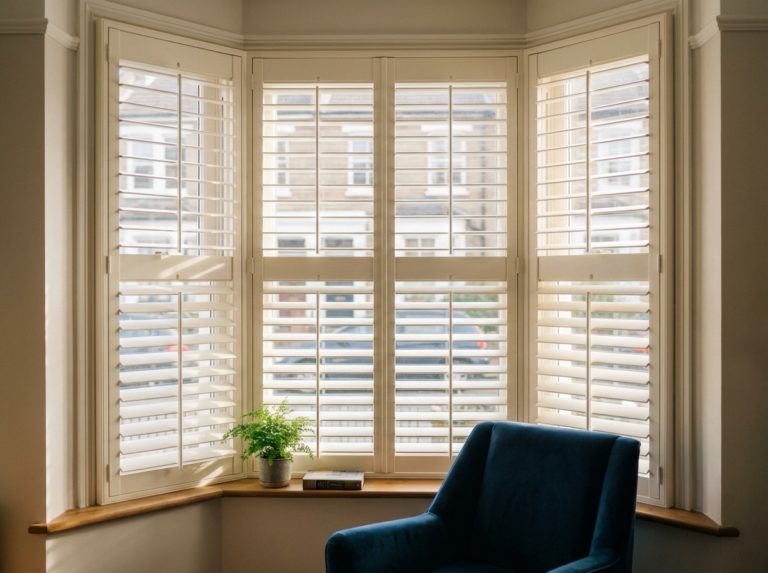
For a bay window, each section must be measured individually, and the angles between sections must be considered as well. It is not simply a case of measuring one panel and multiplying it. The shutter panels need space to open, clear each other and sit neatly within the geometry of the bay.
With older bays, you may find that no two sections are exactly the same width. That is normal. What matters is recording each section accurately and understanding how the frame will be built to follow the shape. This is one of the clearest examples of where made-to-measure shutters justify their appeal. A well-designed bay shutter looks elegant and architectural. A poorly measured one looks forced.
For unusually shaped windows, measurement is even more specialised. Angled tops, portholes and arches often need templates or advanced surveying rather than basic tape measurements. If your window is a feature, the measuring process should protect that feature, not compromise it.
Common mistakes when measuring shutters
The biggest error is assuming the visible opening tells the whole story. It rarely does. Handles, hinges, alarm sensors and tiled reveals can all affect the final frame position.
Another common mistake is measuring brick to brick or plaster edge to plaster edge without thinking about where the shutter frame will actually sit. A shutter is not a roller blind. It has structure, panels and clearance requirements. It needs to open properly, fold properly and look right from every angle.
There is also the question of window furniture. If the handle projects significantly, a deeper frame may be required. That can slightly change the overall look, but it may be the right trade-off to preserve smooth operation. Likewise, if the sill is uneven or the walls are not straight, installation methods may need adjusting.
These details are exactly why homeowners often move from initial measuring research to a home survey. It is reassuring to know the finished shutter will suit the real shape of the room, not just the theoretical dimensions on paper.
Why accurate measuring affects the final finish
When shutters fit well, the whole room feels more polished. Sightlines are cleaner, panel gaps are consistent and the shutters feel like part of the architecture. That is especially important in living rooms, master bedrooms and kitchen extensions where the window treatment plays a major role in the overall design.
Accurate measuring also affects performance. A shutter that is correctly specified will open and close smoothly, provide dependable privacy and light control, and sit neatly over time. A poor fit can lead to rubbing panels, awkward gaps or a frame that never looks quite settled.
This matters even more when you are choosing premium wooden shutters rather than a cheaper off-the-shelf alternative. Bespoke products are an investment, and the measuring stage protects that investment.
When to measure yourself and when to book a survey
If you are at the early planning stage, measuring your windows yourself is useful. It helps you understand what might be possible, gives you a sense of scale and allows for more informed conversations about style and budget.
If you are ready to order, professional measuring is the wiser route. A specialist will check recess depth, panel configuration, frame choice, opening clearance and all the practical details that are easy to miss when you are standing in your own home with a tape measure. They can also advise on what will look best, not just what will technically fit.
That is where a consultation-led service makes a genuine difference. With a company such as Fab Shutters & Blinds, the measuring process is not treated as a quick formality. It is part of the design service, helping ensure the shutters suit both the window and the room around it.
Shutters should feel considered from the start. So if you are measuring now, take your time, note every detail and remember that the best result is not simply about getting numbers on a page. It is about creating a finish that looks quietly exceptional every time you walk into the room.